Vinyl pool liners are sold in 20, 27, 28 and 30 mil, and the higher number almost always costs more. But mil measures thickness, not durability. Many builders prefer 20 mil because it stretches and fits better, and a well-installed 20-mil liner outlasts a poorly installed 30-mil liner.
What the Mil Number Actually Tells You
Mil is a measure of thickness, and 20, 27, 28 and 30 are the four grades you will see on a quote. A 27-mil and a 28-mil liner sit close enough together that the difference rarely decides anything. Going from 20 mil to 30 mil is the jump that changes both the feel of the material and the price.
Thicker material resists punctures and tolerates a rougher floor. Thinner material stretches into corners and around steps more easily. Those two properties pull against each other, which is why more thickness is not automatically more value.
Why a Thicker Liner Is Not Automatically Better
The biggest factor in how long a liner lasts is the installation, not the label on it. A well-installed 20-mil liner outlasts a poorly installed 30-mil liner.
A 30-mil liner forced onto a pool with a rough or uneven floor will rub, crease and fail early, and the extra thickness does not save it. If your floor needs patching or vermiculite repair, that work costs $150 to $3,000 and matters far more to the finished result than the grade of vinyl you bought.
What Each Choice Costs
| Choice | Cost Impact | Consider It When |
|---|---|---|
| Stay at 20 mil | Included in the quote | Fit and flexibility matter more than abuse |
| Upgrade thickness | Adds $200 - $700 | Pets, debris, a rough floor or heavy use |
| Premium 30-mil | Material alone up to $4,000 | You want the top of the range and will pay for it |
For context, liner material alone is $1,200 to $2,100 for a standard inground pool and $500 to $900 above ground. Labour is separate, running $1,000 to $2,500 inground and $250 to $800 above ground.
What the Warranty Says About Thickness
Manufacturer warranties are pro-rated limited warranties, and published examples include a premium 20-mil liner covered for 20 years and an AquaMax-class liner covered for 25 years. They are typically non-transferable and exclude installation labour, replacement water, chemicals, fading and chemistry damage. Installer workmanship cover is separate, usually 1 to 3 years.
Notice what that means in practice. A thicker liner does not automatically buy you a longer warranty period. Ask what the specific product on your quote is covered for, and for how long, rather than assuming the grade carries the answer.
Choosing for a Charlotte Pool
Two local conditions push the decision. Mecklenburg County soil is clay-heavy, drains slowly and shifts over time, and expansive clay movement works on pool walls, floors and coping. That is an argument for spending part of your budget on proper floor preparation and for choosing a liner that tolerates a slightly irregular substrate.
The second factor is season length. A pool used hard through a long Charlotte summer takes more wear than a pool open for eight weeks, so homeowners with heavy use, pets or a lot of tree cover reasonably lean toward a thicker product.
Questions to Ask About Thickness
- What thickness is included in this quote?
- What would the next thickness up cost me?
- Why are you recommending that thickness for my pool specifically?
- How smooth is my floor, and is patching or vermiculite repair included?
- What is the warranty period on this exact product, and is it transferable?
- What does your workmanship cover include, and for how long?
Frequently asked questions
Which pool liner thickness is best?
There is no single best answer. Many builders prefer 20 mil because it stretches and fits better, and a well-installed 20-mil liner outlasts a poorly installed 30-mil liner. Upgrade for pets, debris, heavy use or a rough floor, and budget for floor preparation first.
How much does a thicker liner add to the price?
A thickness upgrade typically adds $200 to $700 to the job. A premium 30-mil liner can reach $4,000 in material alone, against $1,200 to $2,100 for standard inground liner material.
Is 27 mil or 28 mil worth the difference?
A 27-mil and a 28-mil liner are close enough that the difference rarely decides anything. The meaningful jump is from 20 mil up to the thicker end of the range, which changes both the price and how the material handles.
Does a thicker liner come with a longer warranty?
Not automatically. Published pro-rated terms include a premium 20-mil liner at 20 years and an AquaMax-class liner at 25 years. Ask what the specific product on your quote is covered for, and whether the warranty is transferable.
Should I upgrade thickness in Charlotte?
Consider it if the pool sees heavy use or has pets, or if the floor is uneven. Mecklenburg County's clay-heavy soil drains slowly and shifts over time, so spending part of the budget on proper floor preparation usually matters more than the mil number.
Sources
- Home In Depth pool liner replacement cost 2026
- Swimply 2026 pool liner replacement guide
- Merlin AquaMax vinyl liner limited warranty (example of pro-rated terms)
Related
Pool liner services in Charlotte
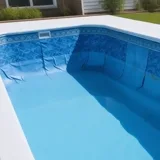
Pool Liner Replacement
A vinyl liner is the waterproof skin of the pool, and Charlotte pools replace one every 5 to 15 years.
Vinyl Pool Liner
Almost every inground pool without a concrete or fibreglass finish is a vinyl-liner pool, and the liner is a consumable.
Inground Pool Liner
An inground liner is fabricated to your pool, not pulled off a shelf, so measurement quality decides the result.
Above Ground Pool Liner
Above-ground liners are the cheapest job in this niche and the one homeowners most often try themselves.
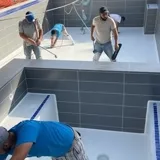
Pool Liner Repair
Not every liner problem needs a new liner, but the ones that cannot be repaired are usually the ones that get patched too long.
Pool Wall And Floor Repair
A new liner over a failing shell is money spent twice.
Areas we serve
Charlotte
Pool liner replacement in Charlotte, NC - costs, water and soil notes.
Huntersville
Pool liner replacement in Huntersville, NC - costs, water and soil notes.
Concord
Pool liner replacement in Concord, NC - costs, water and soil notes.
Gastonia
Pool liner replacement in Gastonia, NC - costs, water and soil notes.
Matthews
Pool liner replacement in Matthews, NC - costs, water and soil notes.
Mooresville
Pool liner replacement in Mooresville, NC - costs, water and soil notes.
Kannapolis
Pool liner replacement in Kannapolis, NC - costs, water and soil notes.